Reflecting forward: Q&A with former iliad Literary-Art Magazine Design Editor Eva Orbock
50th
...
50th ...
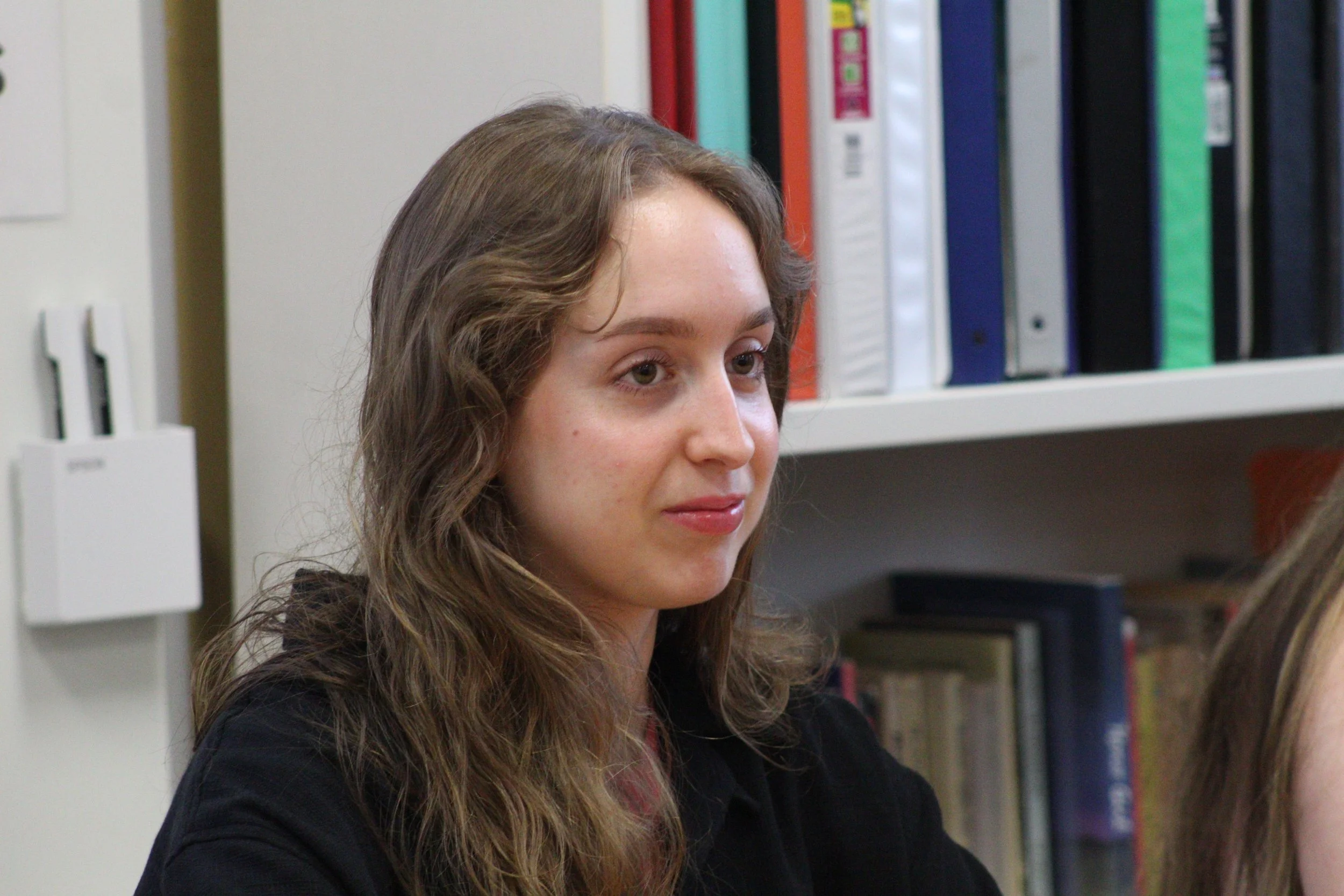
Above: ALUMNI: Eva Orbock, the 2021-2022 iliad Literary-Art Magazine Design Editor, attends a press conference at the ODYSSEY Media Group Summer Workshop with OMG and iliad alumni in Room 231 on July 23, 2025. Orbock was interviewed at a summer workshop on a reflection on her time with the iliad for the 2025-26 OMG and iliad staff. “I really appreciate the practical interpersonal skills that I developed during my time as Design Editor for the iliad. As a student at the University of Washington, I have been a part of different student organizations where I have taken on an administrative or creative role,” Orbock said. “I have done design work for student-published magazines and worked with a ton of new people. Getting to work with new people as a part of the iliad Editorial Board really prepared me to work with new people in college.” Photo by Iliana Tejada
Eva Orbock, 2021-2022 iliad Literary-Art Magazine Design Editor, talks about her time in the program and expectations for this year’s 50th volume of the magazine.
Outreach Director Jay Braswell: How did you come to learn about the iliad Literary-Art Magazine, and why did you choose to join the Editorial Board?
2021-22 Design Editor Eva Orbock: I had friends that were a part of the ODYSSEY Media Group and the iliad (Literary-Art Magazine). When I was a junior, one of my friends, who was the Business Manager for the 2020-2021 iliad, (Connor Allen), encouraged me to submit some of my art to that year's edition. This was the first time I (had) actually engaged with the iliad, despite having known about it for a long time. One of my digital art pieces, “In Bloom,” did end up being featured in “OKEANOS,” and this further encouraged me to become more involved with the program. I applied to be a part of the editorial team shortly thereafter.
JB: As the 2021-2022 iliad Design Editor, how would you describe your personal experience in terms of your specific role and being a part of the program as a whole?
EO: The role of Design Editor was, to my knowledge, unique to me at the time. Previously, the Editor-in-Chief was mainly in charge of designing the magazine, with some assistance from the Managing Editor. I was originally brought on as the Managing Editor, but it became clear that, because I had the most experience in graphic design, the iliad would be better suited if I took on all of the design responsibility. This led to reorganization of duties amongst the Editorial Board. The Editors-in-Chief, Kaija Gilbertson-Hall and Luna Reichert, took on my previous duties of managing and communicating with the rest of the Editorial Board, and I became responsible for all of the design-related duties. The Editors-in-Chief and I still shared the responsibilities of curating pieces for the magazine, setting up the Creative Writing Project, and acting as Copy Editors for the magazine.
JB: What are some accomplishments from your time in the iliad as Design Editor that you’re proud of and why?
EO: What I am most proud of is the magazine “Astraeus.” I spent so much time and energy designing it, it took up all of my free time for months. It is the single thing that I am most proud of creating. I even have some of the pages up on the walls in my apartment as a part of a larger gallery of artwork and mementos.
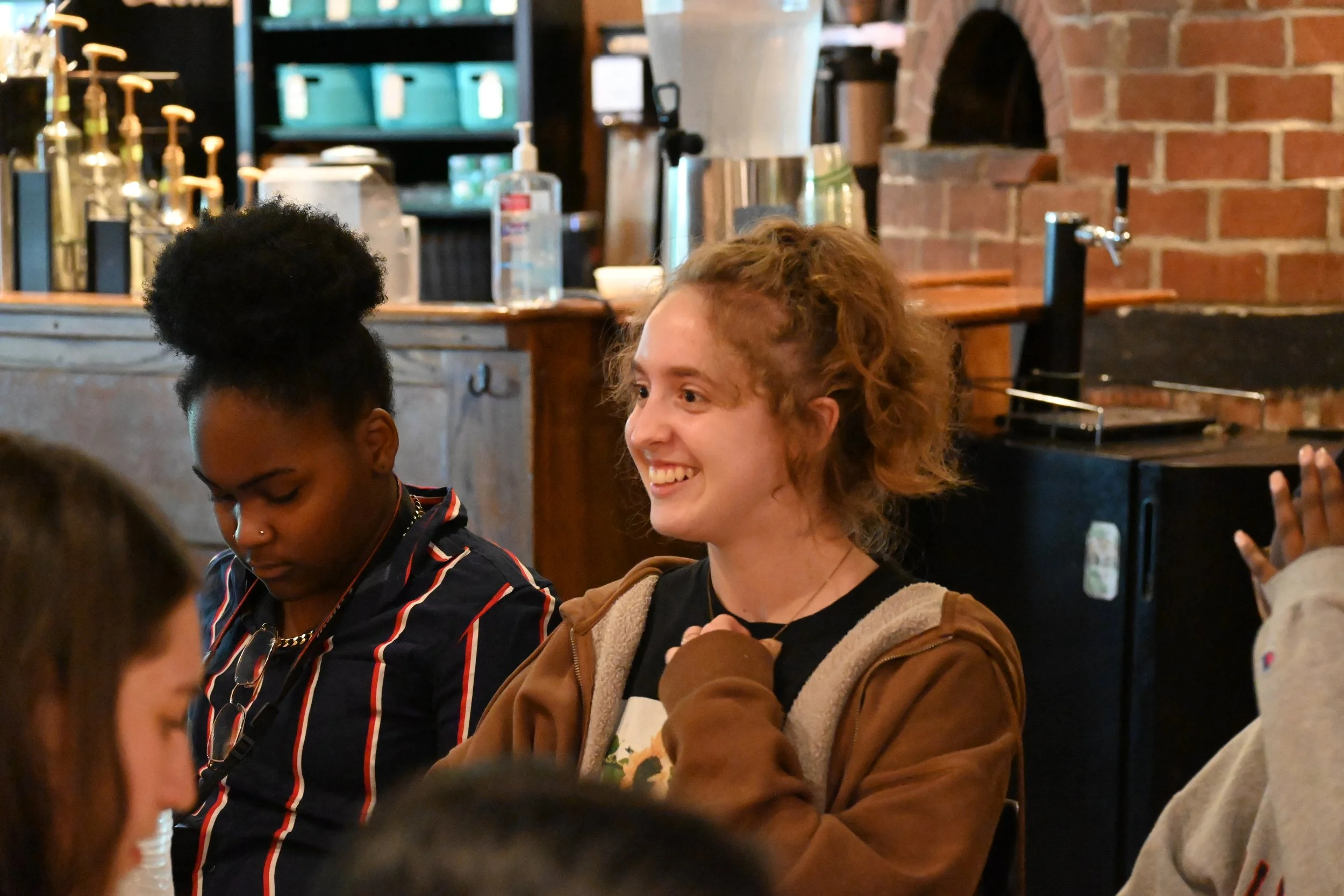
Above: REFLECTING: Eva Orbock, the 2021-2022 iliad Literary-Art Magazine Design Editor, sits in Hendershot’s on Jul. 23, 2021, at the conclusion of the ODYSSEY and iliad 2021 Summer Workshop. Orbock was a part of the iliad Editorial Board during her senior year and designed the iliad’s 47th edition, “Astraeus” magazine. “As a part of the Editorial Board, I really enjoyed getting to see all of the beautiful artwork and writing that was submitted. We appreciated every submission, and I took great pride in being able to help the wonderful work of Clarke Central High School, as well as some CCHS and BHL students’, reach a broader audience,” Orbock said. “The goal of the iliad is to elevate and celebrate student voices, and that is only possible through the engagement and submissions of the students.” Photo from the ODYSSEY Media Group archives
JB: The COVID-19 pandemic was a large factor that affected schools worldwide. Since the iliad is a student-run program, what effect did you see the pandemic have, considering you were in the program during the recovery period of the pandemic?
EO: I think that, because my first year was also the year where we switched back to fully in-person, there was a bigger interest amongst students to engage in more extracurricular activities in general. This, in turn, led to an increased interest in the iliad. Also, being able to host in-person club meetings, author visits, and ceremonies helped generate more interest.
JB: The iliad is based on the Greek story by Homer, and the designs you created incorporate a lot of inspiration from Greek mythology. Can you describe the creative process of researching and designing graphics based on this?
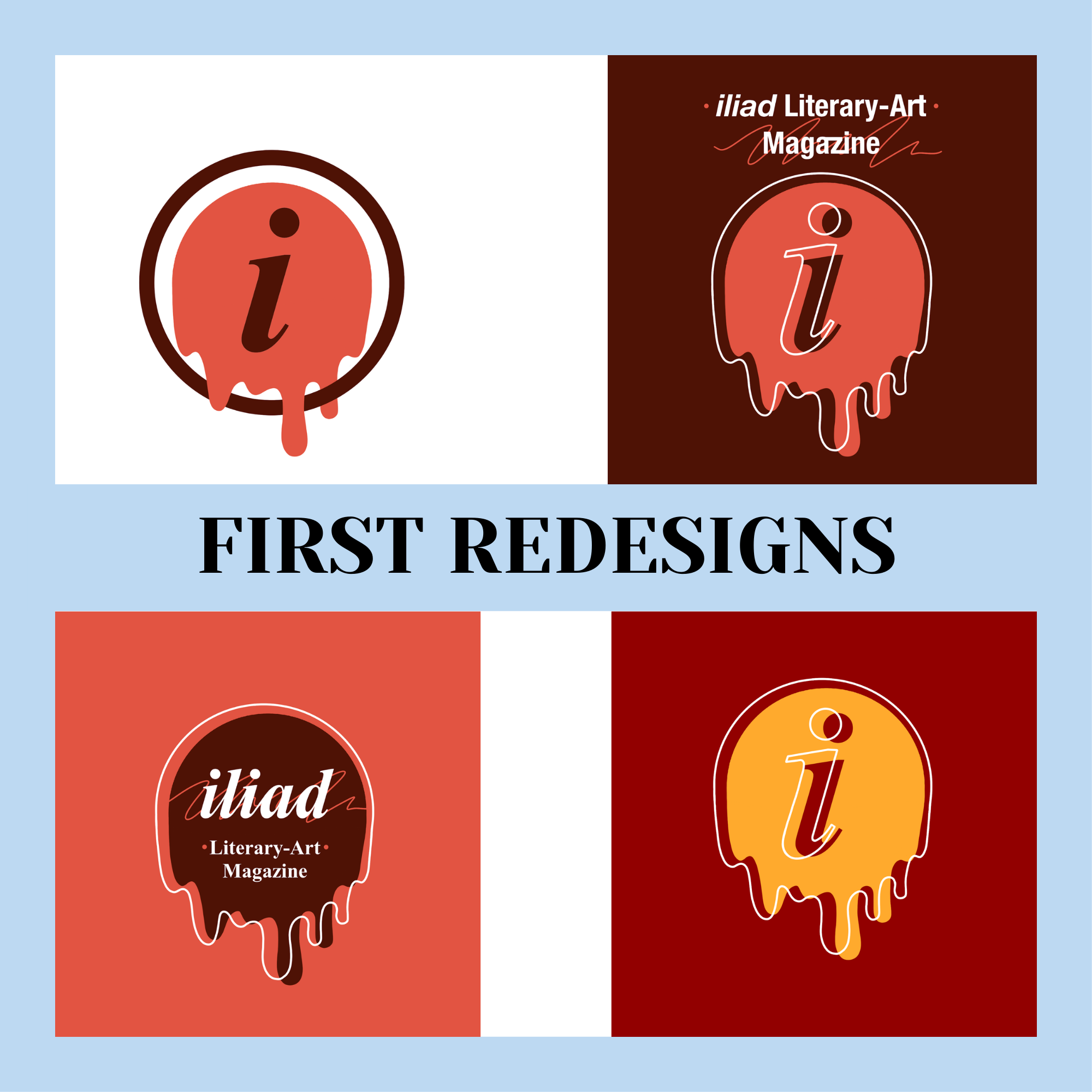
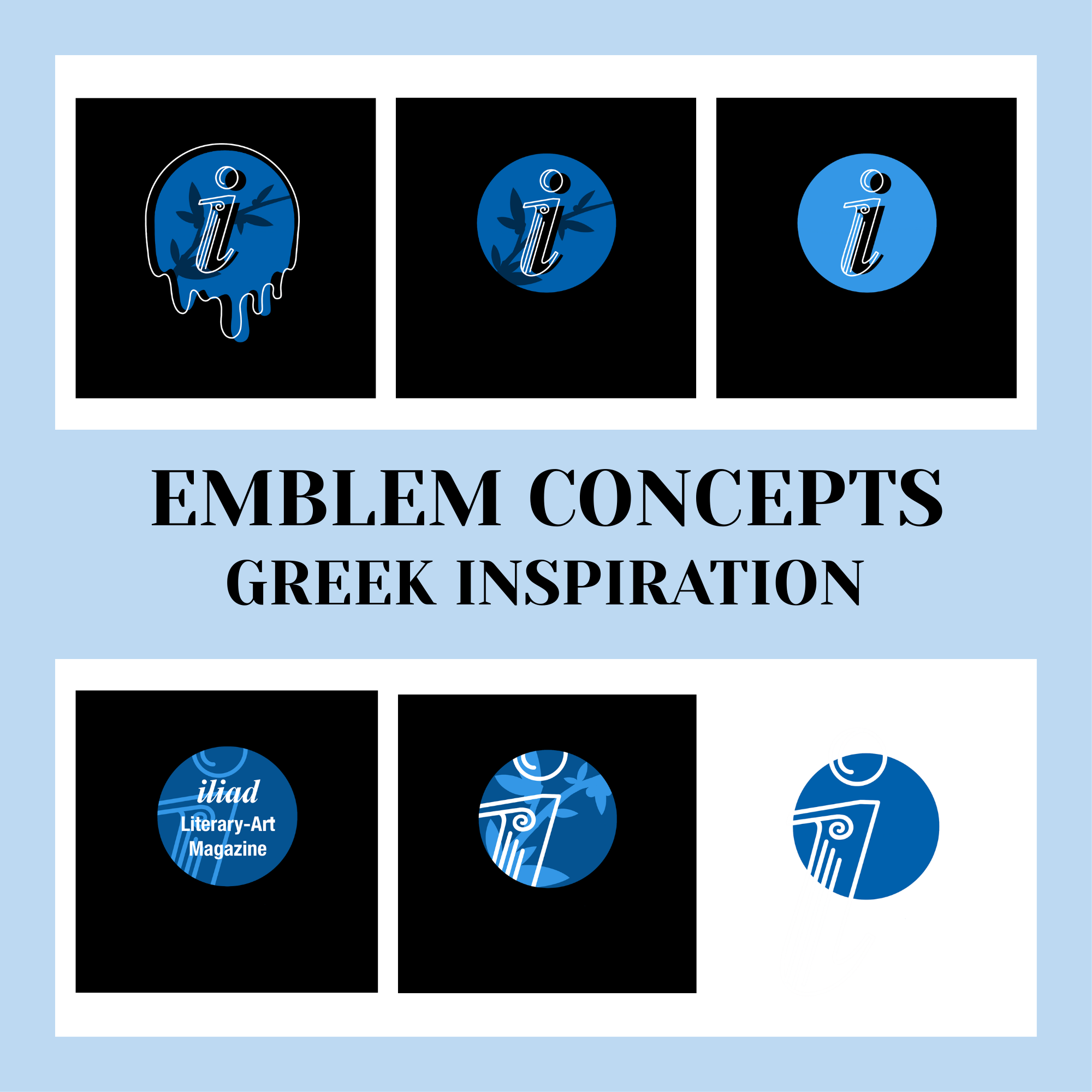
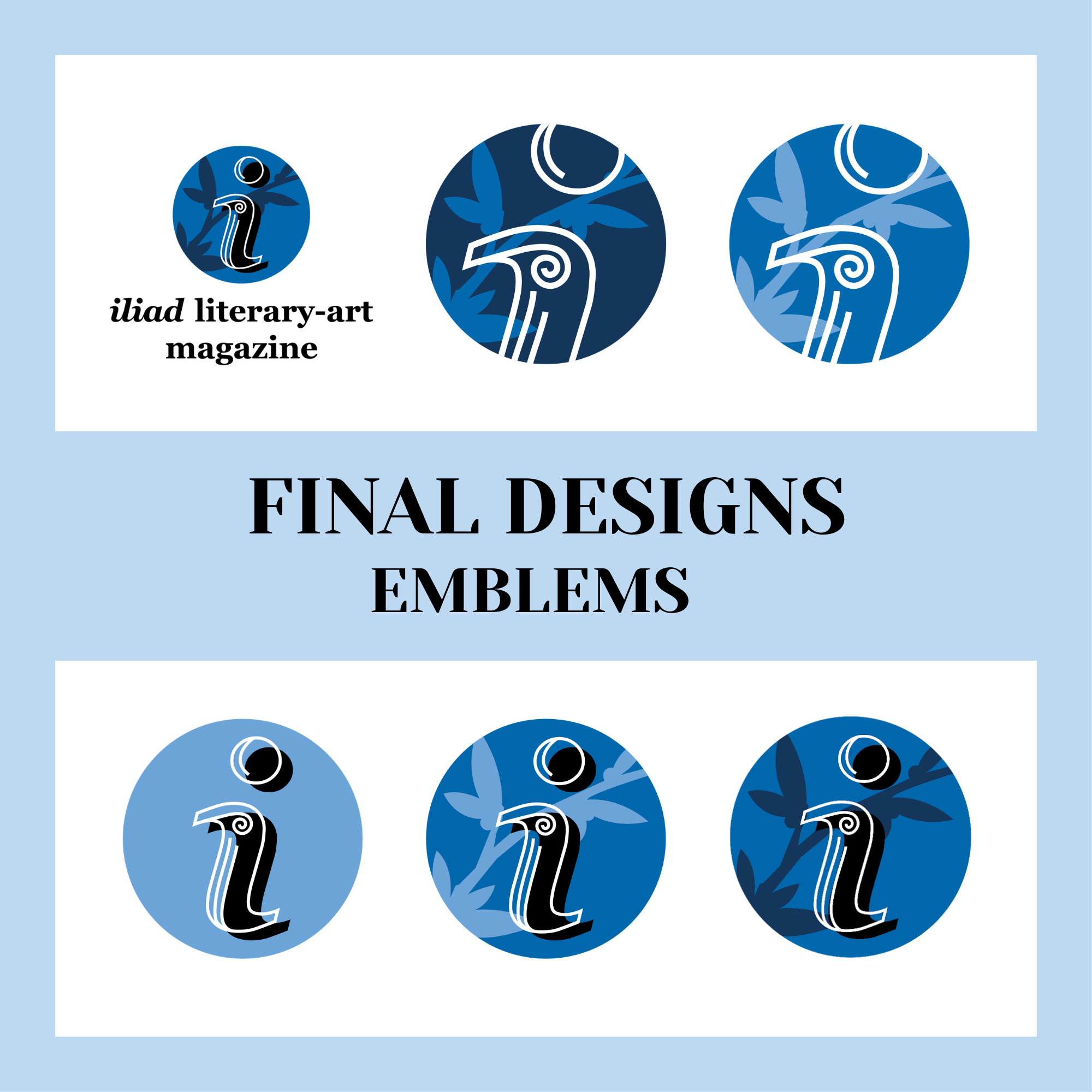
EO: At the beginning of the 2021-2022 school year, I, along with (Mr. David A. Ragsdale) and the Editors-in Chief, Kaija Gilbertson-Hall and Luna Reichert, decided that the iliad needed a revamp. We planned to make a new website, and I was tasked with rebranding it: making a new logo and creating a style guide. My original logo concepts did not really involve any references to Greek mythology. It was a simple emblem-type logo that had a lowercase “i” in front of a paint splatter. It was very simple, too simple even, as there wasn’t anything about it that conveyed anything about the iliad. After meeting with Beth Thrasher, Creative Director of Thrasher Photo and Design, we agreed that the inclusion of references to Greek mythology should be a prominent part of our new logo and the rebranding efforts as a whole. What followed this meeting was a lot of trial and error on my part to figure out what Greek element to include and how they could be included without feeling forced or busy. I decided on including a Greek column motif and an olive branch. These are things that I felt a lot of people would automatically associate with Greek history and mythology. In Greek mythology, the olive branch is a symbol of peace and wisdom. The column motif is the outline of the “i” and the olive branch is incorporated into the background.
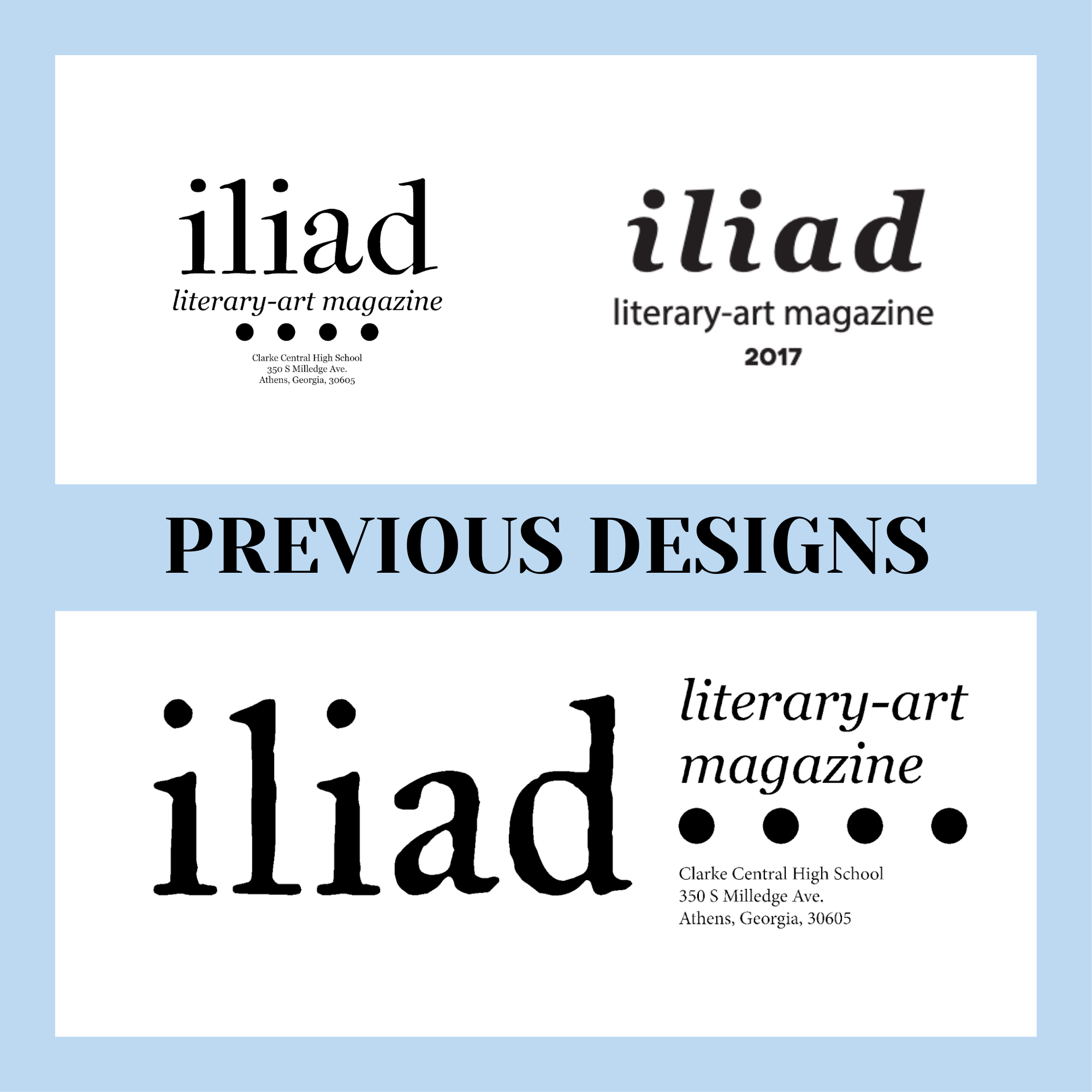
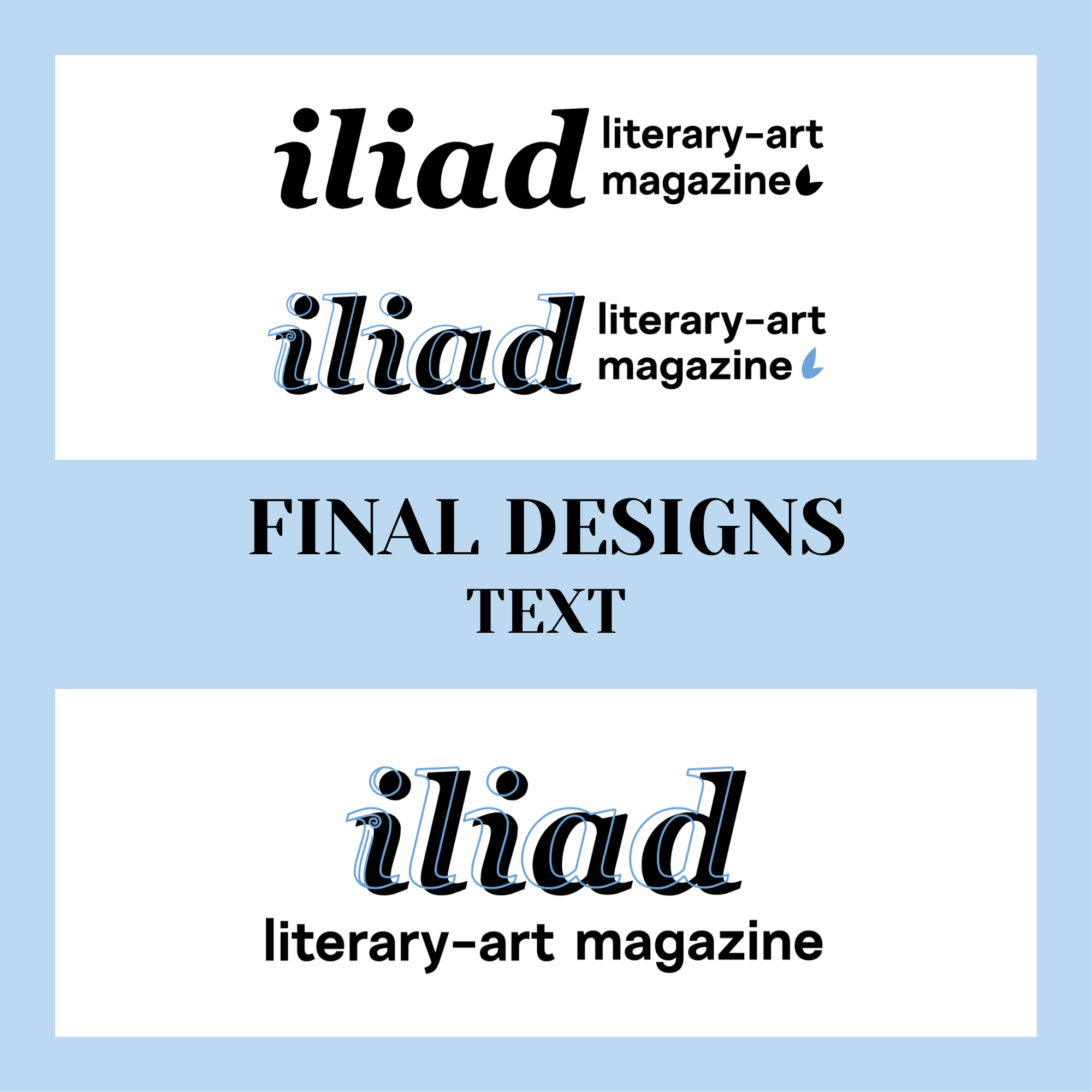
JB: During your time as Design Editor, you created the iliad logo that is still used today. Why do you believe this design has had such a long-lasting impact on the iliad?
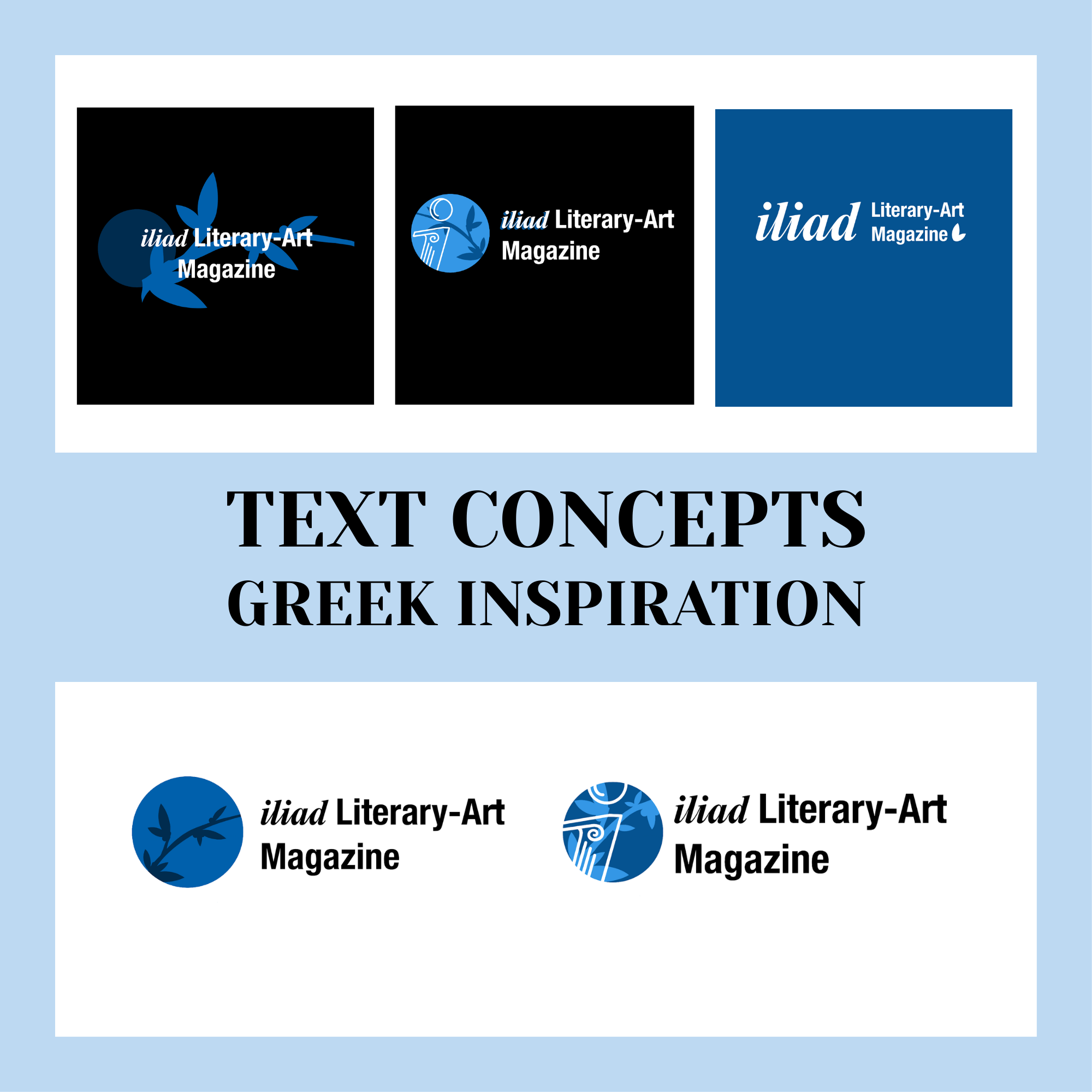
EO: The biggest difference between the logo that I created and previous logos is that mine was a part of an overall rebranding effort. The logo incorporates and complements other branding elements like the new color scheme, font selection, and use of Greek motifs. I also created many different versions, which makes it more versatile. There is a plain text, circular emblem, and expanded logo that are cohesive.
JB: The iliad website first started publishing digital stories while you were a member of the Editorial Board. How did you see the start of this impact the work of the Editorial Board?
EO: I didn’t personally contribute that much to efforts to post digital stories, but I did see how it reshaped the role and responsibilities of the other members of the Editorial Board, Editors-in-Chief Kaija Gilbertson-Hall and Luna Reichert. Previously, the iliad Editor-in-Chief was mainly responsible for designing the magazine, sometimes with the help of the Managing Editor. As Design Editor, I took on the full weight of designing the magazine as well as other promotional materials, leaving the Editors-in-Chief more time to focus on new things like digital stories and creating the website.
JB: How has your work and experience in the iliad followed you outside of high school?
EO: I really appreciate the practical interpersonal skills that I developed during my time as Design Editor for the iliad. As a student at the University of Washington, I have been a part of different student organizations where I have taken on an administrative or creative role. I have done design work for student-published magazines and worked with a ton of new people. Getting to work with new people as a part of the iliad Editorial Board really prepared me to work with new people in college.
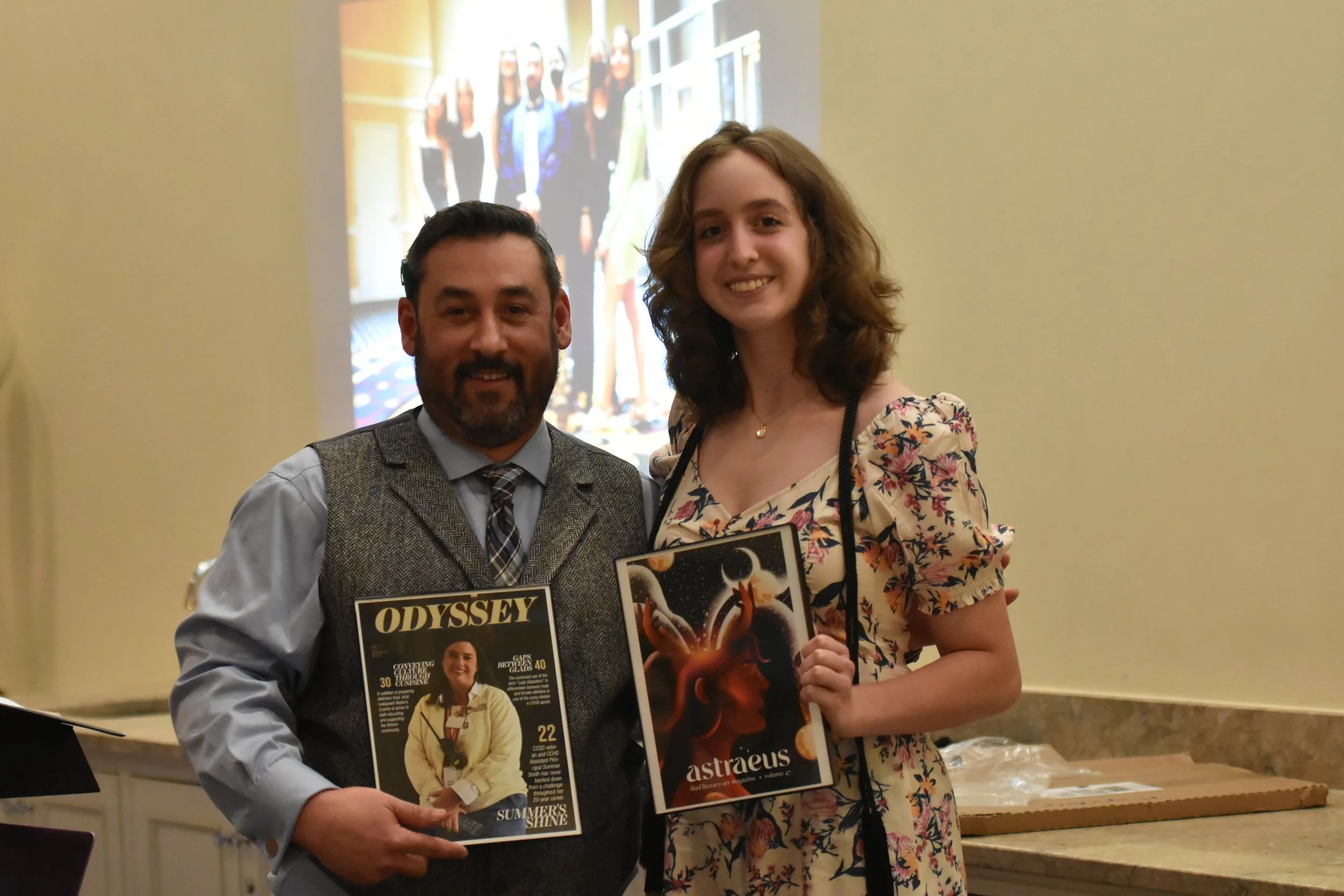
Above: CELEBRATING SUCCESS: Eva Orbock, the 2021-2022 iliad Literary-Art Magazine Design Editor, poses with David Ragsdale at the 2022 ODYSSEY/iliad Banquet on May 22 at Trump’s Ballroom. Orbock held a copy of “Astraeus,” the 47th volume of the iliad, which she designed as a part of her role as Design Editor. “The role of Design Editor was, to my knowledge, unique to me at the time. Previously, the Editor-in-Chief was mainly in charge of designing the magazine, with some assistance from the Managing Editor. I was originally brought on as the Managing Editor, but it became clear that, because I had the most experience in graphic design, the iliad would be better suited if I took on all of the design responsibility,” Orbock said. Photo by Lucas Donnelly
JB: This year will mark the 50th volume of the iliad Literary-Art Magazine. What do you hope to see for this year’s publication?
EO: I would love to see a celebration of student voices, past and present. The iliad has grown so much, even in the three years since I was a part of the Editorial Board. I would love to be able to see how it has evolved throughout the years.
JB: If you had the opportunity to come back to the iliad Editorial Board to contribute to the 50th volume, what are some things you would apply from your previous experience, and what would you change?
EO: There is beauty in simplicity. The biggest critique that I have of the edition that I designed is that it is a bit over-conceptualized. Everything has meaning and abides by very narrow themes, even when it does not necessarily look the best or translate that well for the reader. I spent a lot of energy creating distinct design elements – colors, shapes, wingdings, and other motifs – for each section of the magazine, which I do not feel really enhance the reader’s experience of the magazine. That time and effort may have been better spent copy editing or working on other things for the iliad like digital stories for the website or promotional materials.
JB: Based on what you've learned, what advice would you give to people interested in submitting to the iliad and the current Editorial Board?
EO: For those thinking about submitting, just do it! I had my artwork featured in the 2021 issue, “OKEANOS,” and I was pretty apprehensive about submitting. I was worried about my work not being good enough. As a part of the Editorial Board, I really enjoyed getting to see all of the beautiful artwork and writing that was submitted. We appreciated every submission, and I took great pride in being able to help the wonderful work of Clarke Central High School, as well as some CCHS and BHL students’, reach a broader audience. The goal of the iliad is to elevate and celebrate student voices, and that is only possible through the engagement and submissions of the students.
Story by Jay Braswell
Jay Braswell is a sophomore at Clarke Central High School in Athens, Georgia, and is the Outreach Director for the iliad Literary-Art Magazine. Braswell hopes that her contribution to the iliad will help inspire young artists around the Athens community. When they aren’t hanging out with friends, Braswell enjoys listening to music and painting.